WOLVES
AMONG US
BOOK ONE
The most dangerous darkness
is the one you cannot see.

AMONG US
The most dangerous darkness
is the one you cannot see.
The most dangerous darkness is the one you cannot see.
Øyvind grew up on the east side of Oslo among those who occupied the lowest rungs of society's ladder, in an environment marked by substance abuse and gangs. With no one to guide him forward, the path to drugs, street fights, and a reckless lifestyle became shorter than it should have been.
A curiosity about the end times emerged when the Soviet Union collapsed and the Gulf War broke out. In the midst of this came faith — not from a church pew, nor through other people, but from his own questions and what he discovered while reading the New Testament on his own. That faith led him into Christian communities and Christian television ministry, and he devoted himself wholeheartedly to what he believed was right.
But the deeper he went, the clearer another picture became: structures that led away from what the faith itself pointed toward. It was rarely a matter of individuals with evil intentions — it was systems.
Wolves Among Us is the story of finding genuine faith, searching for fellowship — and discovering a wolf that should never have been there. Some questions never let go of you. And some answers never let you go back.
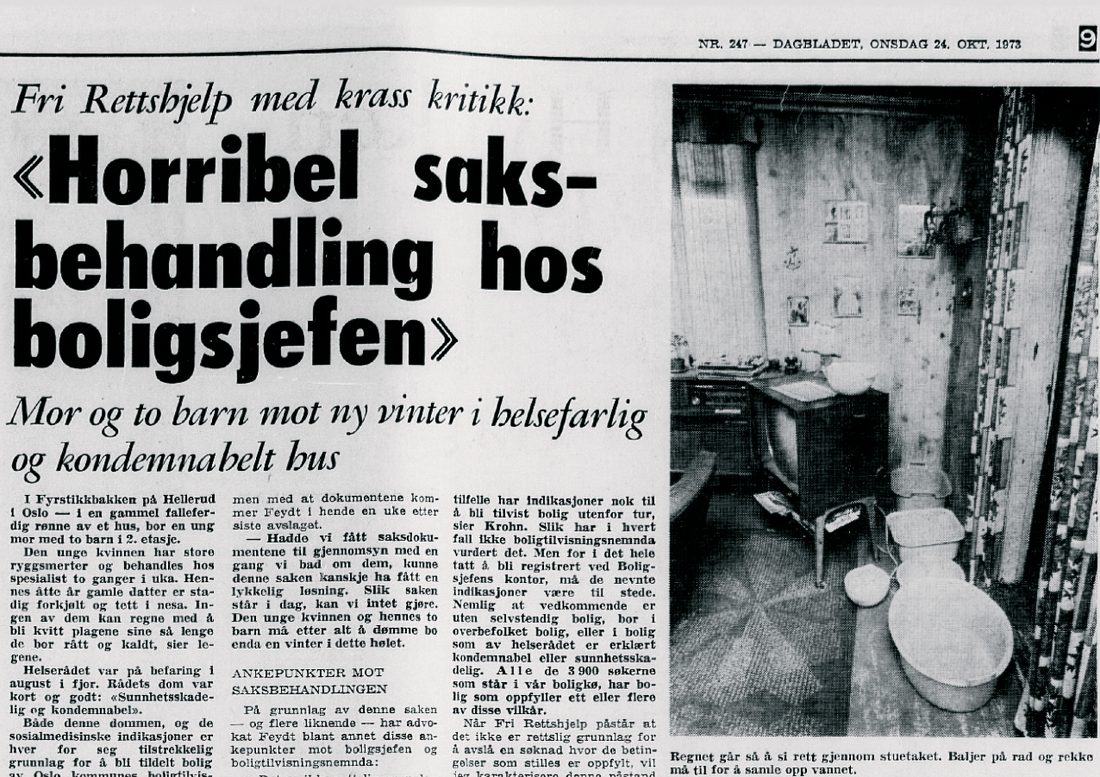
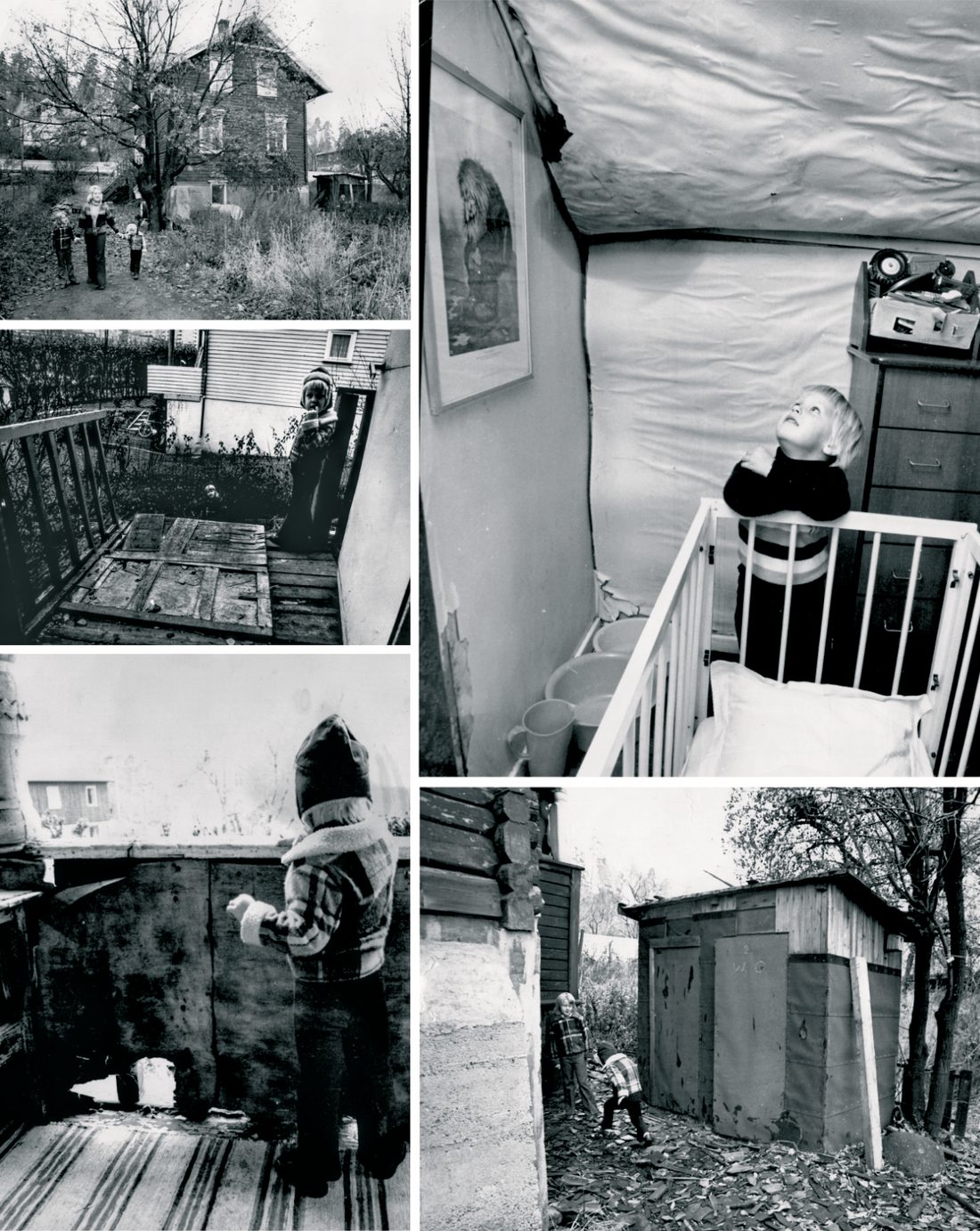
I was born in Oslo and grew up in the east end of the city — in a small apartment, in an ordinary working-class family. My mother divorced when I had just turned one, and together with my sister, who was four years older than me, we found ourselves living in what can only be described as genuine poverty. For a time, the three of us shared shelter in part of a dilapidated old building — conditions far below any acceptable standard for a family, even in a country like Norway.
In the 1970s, Norway had price controls and a severe housing shortage. Finding a place to live was difficult for most people unless you had savings or other means of financing. And even if your finances were in order, you often had no choice but to join a waiting list for housing allocation.
My mother became chronically ill after giving birth to me and was no longer able to work. She was granted a disability pension through Norway's newly established National Insurance Act of 1967, but it was far from easy for a single mother to fight for her rights and demand equal treatment with the limited resources a minimum pension provided.
It was only when my mother found a lawyer with a passion for justice that the media of the day picked up the story and recognized its human-interest value — and her cry for help was finally heard. After coverage on NRK, Norway's national public broadcaster, and in the daily press, our case was taken seriously and we were immediately allocated a home.
We were given a small three-room apartment in the lovely neighborhood of Tonsenhagen. The surroundings of this part of Oslo's east end — with the Lillomarka forest right behind us, the Grefsenkollen ski slope nearby, and wide green fields all around for sports and play — were an entirely new world to me. For a little boy whose earliest years had been spent in what could only be called a slum, this felt like nothing short of paradise.
We were a family of three until I was around five years old, when a wonderful stepfather came into our lives. Up until then I had missed having a father figure, and Morten filled that role completely. He became my dad, even though he and my mother never married. For the first time in my life, I experienced what it meant to be part of a real family.
Morten was a factory worker with a modest income, but despite our continued financial limitations, the years that followed brought simple and happy family holidays — camping along the southern coast of Norway — and warm, memorable Christmases together.
We lived as a complete family for many years, and Morten did everything in his power to keep us functioning together in harmony. Everything was carefree and good — until the day he decided to leave my mother. It had weighed heavily on him that he had no biological children of his own, and my mother had been too afraid to become pregnant, knowing it could worsen her already fragile health. I was around twelve years old at the time.
Up until that point I had grown up in a safe and stable environment with a short walk to school. Tonsenhagen School was, by any measure, a rather unusual school for the 1970s. What made it remarkable was that a state school in the middle of Oslo still practiced prayer.
It was not a Christian school as such, but for reasons I never fully understood, many of the teachers there believed in a good, old-fashioned moral upbringing. From first through sixth grade, we recited the Lord's Prayer every single morning for six years — and before heading off to lunch, we sang a traditional Norwegian grace: «O' du som metter liten fugl…» — "O Lord, who feeds the smallest bird…"
At the time, I did not consider myself a Christian — despite the involuntary religious upbringing the school had given me. Nor did I particularly oppose the Christian faith. My stepfather believed in God, but he was not a practicing Christian either. He did, however, maintain a lifelong tradition of attending church on Christmas Eve — and that was about the extent of it. I had my own personal conviction that God existed, much as Morten had his. This was the kind of folk Christianity common to that era: don't steal, don't lie, and don't swear.
When my stepfather left, things began to shift in my life. I had just finished primary school and was starting 7th grade at Årvoll Junior High School. The unraveling of our family was beginning to show its effects. I went from a school where teachers demanded discipline and attention to one with no moral framework of any kind. From that point on, I was largely left to my own devices.
I no longer had a father figure, and there was no one to set any boundaries. My mother, struggling with her own physical ailments, had no way of seeing what was coming. It was more than enough for her just to keep food on the table and clothes on our backs while living with her chronic pain.
From that point on — from the age of roughly twelve — my life began drifting toward uncertainty. I started to see myself as my own master, accountable to no one. I would do exactly what I pleased: whatever felt fun, comfortable, or exciting. It was the beginning of a deeply destructive path — one that, looking back, could easily have cost me my life.
There was never any shortage of activity in my life. I had the opportunity to try just about anything that caught my interest, and people have often been surprised by the sheer variety of things I got involved in growing up. I went from football to ice hockey, from scouts to ski jumping, from wrestling to karate, and then on to boxing. Above all, I had a genuine love for boxing and ice hockey — but it would not last.
After primary school, other interests began to replace sport. At my new school there were older boys and girls all around me, and suddenly life felt far more exciting than anything I had known before. A new social world opened up — one that conveniently distracted me from what I had lost: my family.
It was around this time that I met Kenan, a second-generation immigrant from Turkey. What impressed me about Kenan was his absolute self-confidence. His older brother had a black belt in karate, and it was clear that Kenan had picked up a few moves that I couldn't match.
What I found most interesting was that he stole cigarettes from his father every single day and shared them with me. At first I was just curious — I didn't even inhale. But it wasn't long before I started to. There was an underlying peer pressure at school, driven by the fact that the dominant social crowd all smoked.
From this point on, my attitudes began to change dramatically. I quit ice hockey, karate, and boxing — even though I had been developing a real feel for the latter.
I have thought many times since then about how different my life might have been if I had simply kept going with those activities — but I was at the mercy of my circumstances. There was no one there to push me forward or keep me on track. Instead, I surrendered to whatever seemed far more exciting at the time.
Most of my new friends were older than me, and it wasn't long before I was introduced to alcohol and got drunk for the first time. Kenan, Kenneth, and I had managed to get our hands on a good supply, and there we sat in broad daylight, drinking. At some point I had to go home to my mother, and I was dreading it. When I walked in, it didn't take long for her to figure out I'd been drinking. She immediately started shouting and carrying on about what I had done. It was uncomfortable, of course, but honestly not as bad as I had imagined. And there were no real consequences — it was simply not easy for my mother to enforce any kind of discipline.
My relationship with school was about to change. My teachers could see I had no motivation to attend, and concluded that a conventional classroom was simply not the right environment for me. In 8th grade, in consultation with the school counselor, I was recommended for a program designed for disengaged students. The proposal was a social education initiative for at-risk youth, centered around practical work at the Norwegian Maritime Museum in Oslo. It sounded like a far better option than sitting in a classroom. There we worked on the museum's own historic schooner, the Svanen, learning how to maintain and work a sailing vessel nearly a hundred years old. There was no academic schoolwork involved — and there I stayed for the entire 8th grade year.
That program lasted only one school year, and then 9th grade was waiting at Årvoll School. I was not going back into a regular class — the school had a separate program for a very small number of its most troubled students. I was placed in the class of the well-known Knut Myhrer. There were just six of us in total. We attended school three days a week and spent the remaining two days working practically at a local business. Knut Myhrer taught us every subject, and he was the only teacher we ever had to deal with.
I have to say, Knut Myhrer was a remarkable teacher. He was probably the only teacher at Årvoll School who could not be manipulated by the students. His insight and his method of teaching actually got results. Those of us in his class genuinely learned from him — and for the first time, school felt like a place we didn't mind being.
Junior high lasted three years, and then it was over. It was time for upper secondary school — but throughout those three years, from start to finish, my wayward lifestyle had continued without pause. I smoked regularly, drank on weekends, and had lost my virginity at fourteen to a girl four years older than me. For me, the greatest things in life were thrill and pleasure. I wandered through those years without a care in the world, completely unconcerned about the future.
I had no idea what I wanted to do with my life, but my best friends had applied for the mechanics and engineering track at upper secondary school. It was a program where almost everyone who applied got a place — even with poor grades. I applied too, and so it was that Per, Pål, and I each started in separate classes on the mechanics and engineering track at Elvebakken School.
It didn't take many months before I started to notice that same familiar feeling — the tedium of daily classroom sessions I had never been able to take seriously. Back in a regular school, I quickly grew disengaged again and before long dropped out. To move through my school years a little faster: despite my general dislike of education, I did eventually start fresh. I took on an apprenticeship as a landscape gardener, and that kept me going until I was well past twenty.
In between, I also completed my mandatory military service, and during my apprenticeship years I attended both Sogn Upper Secondary School and the State School of Horticulture. My reason for going through all of this is simply to show that I was never really a failure at school — despite my difficulties conforming to the standard. I was, quite simply, just lazy.
I want to tell you about three different threads from my youth. Up until now, you have learned about my modest upbringing. My intention is not to try to summon sympathy. My sister and I had a good childhood within the working-class world we were part of. The second thread I want to bring forward is the introduction to the spiritual, the occult, and the dark — things that entered my life from childhood onwards.
My mother had a friend named Liv, who was a self-proclaimed psychic — or clairvoyant, if you prefer. She would visit from time to time, and I remember finding it deeply interesting to listen to her as a young boy. She was herself a UFO enthusiast, and it wasn't long before I had become a member of UFO Norway.
From time to time, Liv would visit together with a like-minded kindred spirit. They introduced me to the esoteric and the mysterious, and spoke at length about how there was more between heaven and earth than we were aware of. This, of course, excluded Christianity entirely.
I remember sessions involving healing, warm hands, attempts at levitation, and divination. I won't go into the specific events, but I remember finding it all deeply fascinating. My interest in this New Age spirituality went no further than the moments themselves — I thought about it no more than most people think about reading their horoscope in the paper, watching paranormal programmes on TV, or browsing the internet for the unexplained.
A cousin of mine introduced me to hard rock around the time I started junior high — and it is quite striking how young people are drawn to music they initially don't find particularly pleasant to listen to. I suppose you're attracted to the rebellious, the tough, when you're not particularly tough yourself. It becomes an outer shell — a mask you fix to your face, figuratively speaking. For me, it began with spending a great deal of time tracking down cassette tapes — the technology of the day — by the rock band KISS, then AC/DC and Iron Maiden, before moving on to even harder heavy metal.
My cousin and I felt that being into KISS was something you did when you first hit puberty. We saw the need to move with the music as we got older, so the natural progression was toward harder rock. I had begun collecting vinyl records, and in daily life I dressed in studs and denim. "Denim and leather" became something of a guiding principle — for no other reason than that I thought it made me look pretty tough.
I also had another friend who lived nearby — Tore. We shared exactly the same interests when it came to heavy metal, and one day when I was heading out to hang around the corner of Tonsenhagen Square — where all the other teenagers gathered — Tore came walking toward me. He was on his way to my place because he had got hold of a new vinyl record. When he reached me, he told me he had picked up an album by the band Venom. He then explained that this wasn't heavy metal — it was black metal. I had never heard of black metal, so we went back to mine to listen to the new acquisition.
To my bewilderment, I couldn't quite grasp how this was supposed to be catchy or cool to listen to. Tore was practically beside himself with excitement, but all I could hear was someone making every effort to distort their vocals into something unintelligible, while bass, drums and guitar were hammered on with no apparent coherence. It was a complete mystery to me how he could enjoy it.
Another thing that made it thoroughly off-putting was the blatant symbolism and imagery promoted by the album cover, the lyrics and the band members themselves. It amounted, quite simply, to Satan worship.
Not long after, something strange happened. Suddenly I began to like the music — if we can call the noise that. I went from actively hating it to loving it. And I didn't even stop to ask myself how that had come about.
Tore and I spent whole days singing — or rather howling — the lyrics spewed from the speakers, both at my place and at his. The songs had titles and content along the lines of "Welcome to Hell," "In League with Satan," and "Satanachist" — just to mention some of the grotesque material we were unconsciously promoting. Yes, unconsciously — because we were not genuine Satan worshippers. We simply thought it was cool, and it made us feel tough.
We stood for nothing beyond rock 'n' roll and getting drunk, and as part of our conviction we had to dress the part. We flatly refused to wear ordinary clothes — it had to be chains and studs. We wanted the whole world to know which bands we idolised.
It was important to me to display the symbolism and the bands we idolised. A great deal of it revolved around promoting Satan worship — even though we didn't actually practise it — pentagrams, inverted crosses and Baphomet-like imagery that we patched and sewed onto our clothes. But what did we actually use any of this for? Absolutely nothing.
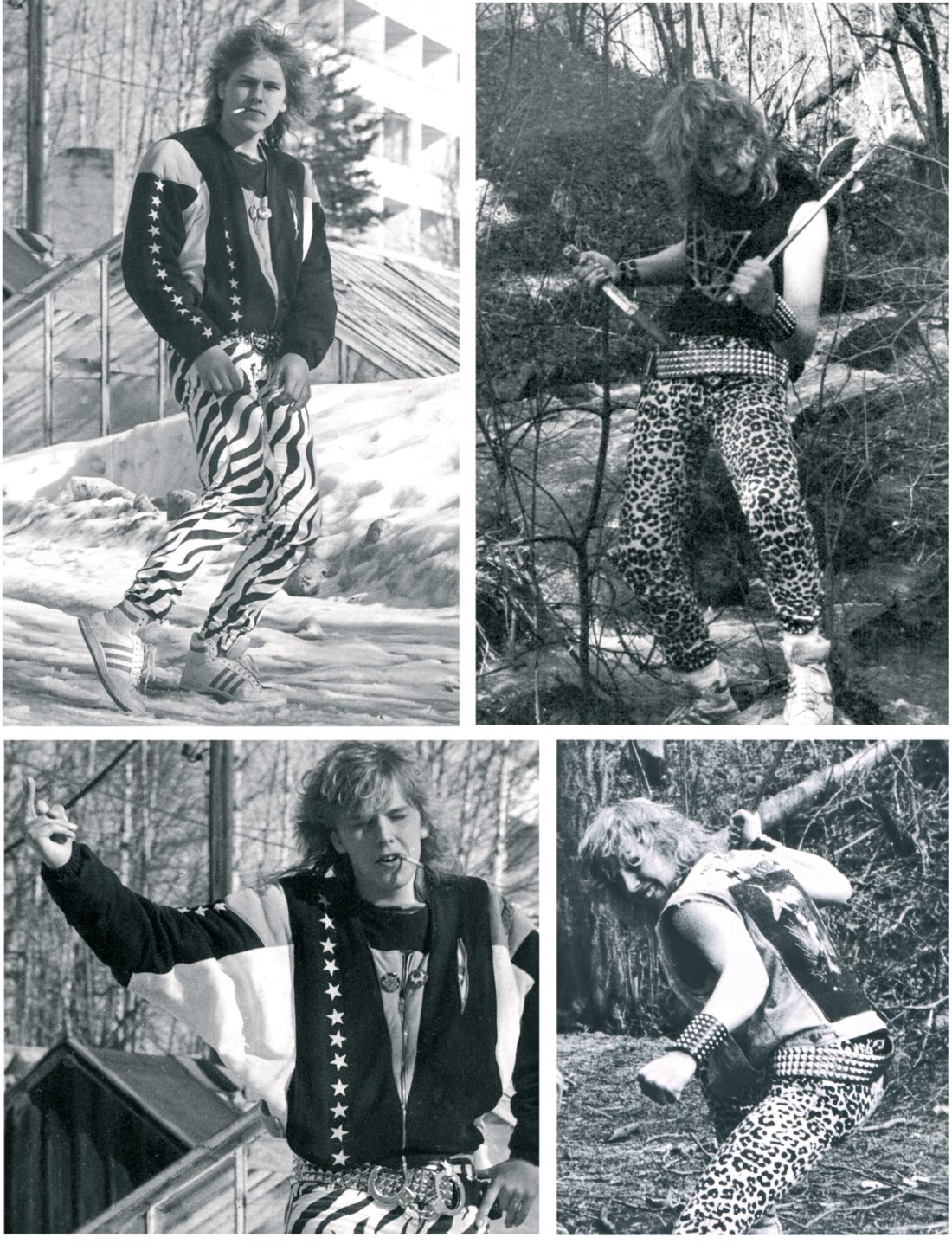
Over time, more people joined us who shared the same conviction and the same outlook on life — though it was no great philosophy, just living for the weekend, getting drunk, and going to rock concerts. Rock concerts were the reward. When a concert was coming up, we could drink in the middle of the week without a guilty conscience.
We could be quite a crowd heading to concerts together, and one of the highlights was ending up in a fight. That carried a kind of status and pride. I suppose we felt a sense of belonging — a pack mentality would take hold in those situations. For a couple of days after a concert, the ringing in our ears was itself a kind of achievement — proof that we had actually been there. If we measured anything as an accomplishment, it was getting to as many concerts as possible. Everything else was dull, though carefree enough. Running around in a gang gave a sense of purpose — and it was a cure for anything that was just empty, aimless killing of time.
Tonsenhagen was home to a large number of young people, and there was a common gathering point for what you might call the various 'cells' or clusters of individuals who had more in common within their own group, but where everyone came together from time to time. It was a large scene. There were hardened alcoholics, heavy heroin users, cannabis addicts, criminals, and those who simply went out to party now and then. Everyone passed through the meeting point at Tonsenhagen. I had many 'best friends,' but from time to time I moved between the different friendship cells.
I had known Per and Pål since first grade and spent time with them on and off, and while they hadn't fallen as deep under the dark cloud of heavy metal and its occultism as I had, they had found their own seductive path. Per and Pål had started spending their weekends in central Oslo.
In central Oslo there was a disco for under-eighteens called Number One — or just 'the One,' as everyone called it. It was a gathering place for young people who got a taste of the seductive glamour and pleasures of nightlife, even though no alcohol was served. Per and Pål had through this been introduced to gangs filled with well-known and popular figures. What made you popular in those days was being feared — or held in fearful respect, if you like.
You earned that fear by fighting — and especially by being able to hand out a beating. Around these popular figures, rumours grew and eventually took on the shape of urban legends about just how dangerous, ruthless and feared they were as fighters. Per and Pål had been introduced into this circle and had already made many friends — not least among the most notorious fighters.
At the time, two rival gangs gathered around the One. On one side were Pakistanis and a handful of Norwegians; on the other, mainly Filipinos with roughly half ethnic Norwegians. This was the era when breakdancing had broken through in Norway in the mid-1980s. Breakdance crews and graffiti had recently taken hold and spread loosely across various parts of Oslo's east end.
Per and Pål pressed me to ditch the chains and studs and join them in the exciting new world they had recently become part of. Reluctantly, I decided to get rid of them, telling myself it would help me grow as a person. Being respected on little Tonsenhagen was no longer enough. In many ways you felt vulnerable against other young people and gangs from other parts of Oslo's east end. Getting accepted among Per and Pål's new crew — with its fighters — would mean protection. Simply being able to say you ran with a certain gang, or that you personally knew certain people, provided automatic protection — just by letting others know that you associated with and personally knew the popular faces.
Walking up and down Karl Johan Street, you could feel a certain protection. Through friends, and friends of friends, you had backup if trouble found you. If you heard someone shout 'Marta,' a fight was always already underway — and everyone who knew anyone came running. Walking Karl Johan Street alone or with friends, you could get immediate help if things went wrong. If you ended up in a one-on-one situation, the other person — who wasn't part of the circle and had wandered onto the wrong street — would very quickly find the odds had shifted to ten-to-one or worse against them.
The first time I went with Pål to the One, it didn't go the way I had hoped. My standard routine for a Friday or Saturday night was to bring a bag stuffed with beer wherever I went. That evening — my first time at the One — I got outrageously drunk. Pål had been pushing me to come along for a long time, and he was going to introduce me to one of the most prominent figures in the Filipino crew. Pål brought me over to a Filipino named Bong, who extended his hand in greeting. But in my drunken state, I failed to return the gesture with any respect. It happened simply because I was so far gone I had no real control over what I was doing.
From what I was told afterwards, Bong had extended his hand in greeting, and I had managed the masterful feat of reaching my own hand out — only to pull it back again. This was considered a fairly serious sign of disrespect.
Pål pulled me aside after we had been there a while and asked why I had responded to Bong's greeting with such disrespect earlier in the evening. All I could say was that I had no recollection of having behaved that way. Pål went on to tell me that the incident had made such a bad first impression that Bong had been ready to give me a beating. After the evening's entertainment around the One — with its inevitable fights to watch — we headed back to Per's place on Tonsenhagen for an after-party. Bong came along too, but Pål had to work some active diplomacy to make sure I didn't become the next victim. The simple fact that I was best friends with Per and Pål was enough to spare me. Bong and I made a second attempt at a proper greeting, and it went considerably better that time. Afterwards I found that Bong was actually a pretty decent guy.
I now felt accepted and had gained entry into this Norwegian-Filipino crew. The chains and studs disappeared, and from that point on the only thing that mattered each weekend was getting to the One. Life couldn't have felt more interesting to me at that point. On top of hanging around the One, my free time consisted of heading into central Oslo with Per and Pål, meeting new friends of theirs and friends of their friends. All of this was starting to do real things for my social standing — something I considered extremely important.
Just as at Tonsenhagen, there were several groupings or cells of different people within this city crew. What was considered one large gang was in fact divided into smaller groups or cells that spent most of their time together. What everyone had in common was that over the course of an evening you would always run into each other — either outside the One or somewhere along Karl Johan Street. Per and Pål were now starting to drift into separate groups of their own.
Per was really the first from Tonsenhagen to break out and become part of this scene. At some point, Per had gone from being a fairly unremarkable kid to a fearless daredevil. Through a group of other daredevils at Frogner public baths, he had become part of a crew whose sport was to dive and perform death jumps from the high diving tower there. Death jumping — then and now — means reckless leaps from great heights, the kind of thing only the truly fearless attempt.
This group — which Per was also part of — was connected to a larger gang of Norwegians and Filipinos that I would later become part of myself. From there, Per had pushed through into the inner circle and become one of the most notorious fighters in the scene. Over time, Per had built a name known across large parts of Oslo's east end. Most people had heard of Per and what he was capable of. He became known for being wild and fearless — and, sadly, for using extreme violence.
When it came to violence, everyone followed the trend of the moment. Everyone carried Batangas — butterfly knives — and throwing stars, also known as ninja stars. There were fights all over central Oslo: direct confrontations with the Pakistani gang and brawls with other smaller gangs. I can't claim I was tough enough to take part in the biggest confrontations, but it wasn't long before I too had no choice but to throw myself in — when trouble came looking for you, you had to answer. Refusing to fight was simply unthinkable, as far as your social standing was concerned.
Without going into the details of every individual incident, the violence was serious enough to have generated sentences of varying length for those involved. Perhaps not in gentle Norway, where the justice system arguably goes easier on perpetrators than on victims. But enough of that — I got my share of both handing out beatings and taking them.
If I took a beating, there was a code that it had to be avenged. On one occasion a guy came running at me and head-butted me square in the face. All I remember is a sweet dreamlike haze, followed by waking up twenty minutes later lying in my own blood, completely dazed and confused about what had happened. Furious and agitated, I started shouting about who had done this to me and demanding to know what had gone on. Someone called over to me that Per was already standing over the guy, beating and kicking him into unconsciousness. I ran over to join in — to get my revenge — but was told by others that he'd had enough.
Per had just finished avenging me, and the person who had head-butted me lay unconscious on the ground, where others had to carry him away. I don't know what became of that man, but experience had taught us that not every act of violence that happened in the city at night made it into the papers.
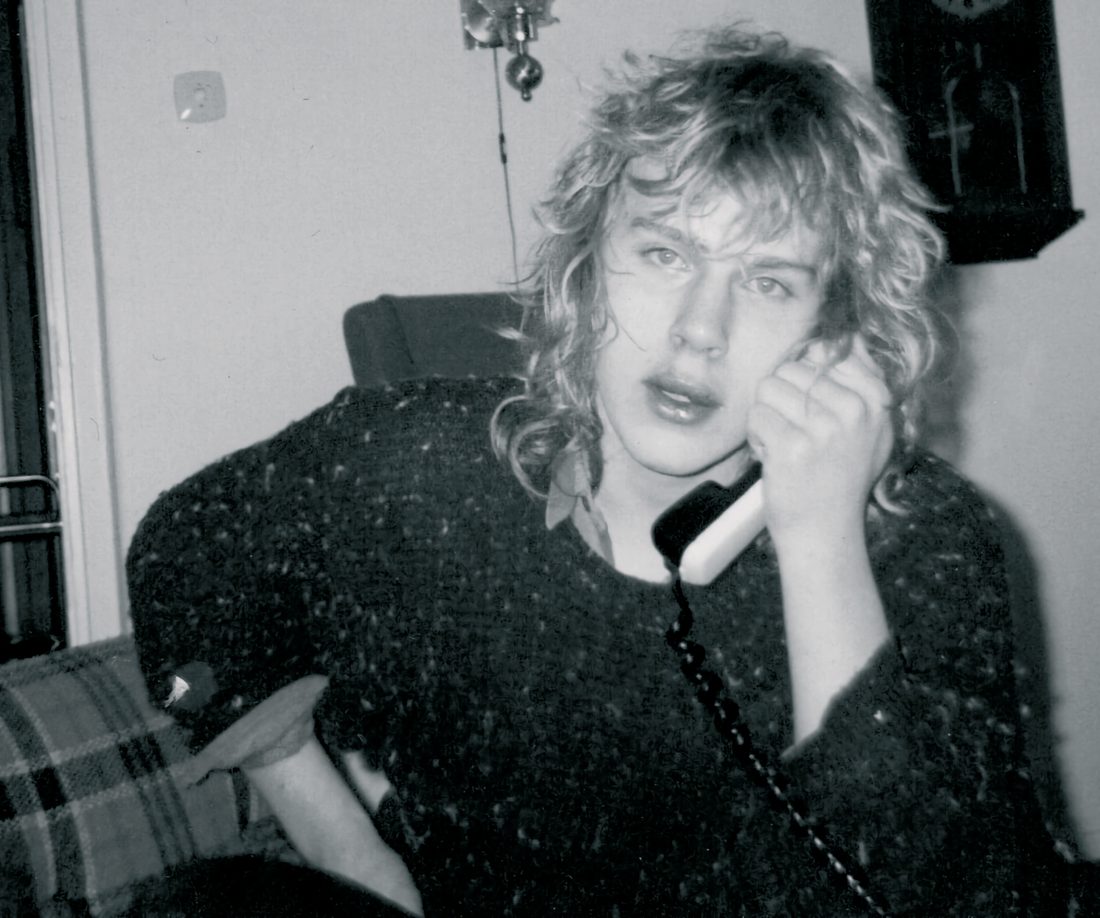
From what I have described so far, the reader will understand that this could not lead anywhere good. And it didn't. Throughout our upbringing, schools and other institutions had done their best to show and tell us children — and later us teenagers — that drugs were harmful, and we were fully convinced. Right up until the age of sixteen, I held the firm belief that drugs were dangerous, and that I, for one, would never try them. As far as I was concerned, drink and parties were enough.
I had managed to scrape my way slowly through school despite the wayward life I was living. What was about to change all that was one of my closest friends introducing me to it.
Pål had himself been introduced to cannabis, and I had known for quite some time that he had started using. In my view, I thought it was a serious mistake on his part, but since I continued to spend time with him, it wasn't long before I had my own first encounter with a hash pipe.
It happened in connection with our weekly weekend drinking run, with Karl Johan Street as the destination. I had my usual bag of beer with me, and we stopped to rest by the river in Grünerløkka — a neighbourhood just outside the city centre — me, Pål, Bong, Louis and Filip — before heading into the centre. They started rolling a joint to smoke in a pipe, and I initially didn't want any part of it, but being the only one who abstained would cost me socially — so I took my first puffs.
I remember very little of my drug debut. I recall that I was already fairly tipsy to begin with, and after smoking my first pipe I quickly became outrageously drunk rather than anything else. When we later walked down to Karl Johan Street, I leaned against a lamp post with my arm to steady myself and tried to take in the people and surroundings around me.
Pål told me afterwards that they had left me there and wandered up and down Karl Johan Street, and after quite some time came back to where they had left me. There I stood in exactly the same position — I had assumed I'd been there five minutes, but it was closer to an hour. All sense of time and place had completely evaporated from my mind. That was my first encounter with cannabis.
Since I hadn't had a genuine cannabis experience the first time — I had simply been too drunk to notice — the second time I smoked would give me a proper sense of what it actually was. And now that I had made my debut as a cannabis user, it would soon become clear which other friends of mine at Tonsenhagen had also taken it up.
The second time I smoked cannabis I was again with Pål, and another friend named Torstein. We headed down into Styggdalen — literally 'the Ugly Gully' — just a stone's throw from Tonsenhagen Square. It was an out-of-the-way hangout where anyone could let loose, and this time I was about to find out what cannabis really meant, for better and for worse.
It wasn't many minutes before my head started spinning, and I was overwhelmed by an inner fear and anxiety. I became heavily intoxicated and had to lie down and close my eyes. I could hear Pål and Torstein talking clearly in the background, while I felt as though I was floating and spinning on a carousel, gripped by a panic unlike anything I had experienced before.
After a while, Pål and Torstein wanted to leave, but I had no choice but to lie there and deal with what was happening to me. Before long my stomach started acting up and I urgently needed a toilet. Finding myself in the woods, there was no alternative but to squat behind a bush.
I naturally needed to open my eyes to find the right spot, which was difficult given my severely blurred vision from the intense intoxication. My stomach was making urgent demands — there was nothing for it but to sit down as fast as possible. Telling this story now, I know it is rather humiliating to share, but if my experience can spare others from the same, I am happy to sacrifice my pride.
After a while — sitting there doing what I had to do — the anxiety began to subside, and I was able to open my eyes and start taking in my surroundings. To my absolute horror, I discovered that I had managed to sit myself down in a patch of stinging nettles. Yes, an actual patch of stinging nettles — and there I sat with my trousers around my ankles.
I was so completely intoxicated and numbed by the cannabis that I hadn't felt the pain. Slowly but surely my brain began to process the situation, and then the pain started to set in. I hauled myself up and leapt out of the nettles in sheer desperation — or rather, humiliation.
I managed to drag myself up out of Styggdalen alone and made it back to Tonsenhagen Square. There sat Pål and Torstein outside the kiosk. And as happens with most cannabis users, the craving for sweets or something to eat had kicked in.
Pål and Torstein were stuffing themselves with sweets and candy, broad grins on their faces and eyelids half closed. It was the funniest sight I had ever seen. I burst into the most uncontrollable fit of laughter. Pål and Torstein joined in, and it became the greatest laughing fit of my life — one that just kept going and going. The awful experience had been pushed aside, and I was now getting to know the side of cannabis that brings most people back for more. I was no exception, and from that point on I became a regular user.
What characterises most cannabis users is that they don't recognise it as a problem — they smoke now and then and therefore don't consider it abuse. It was the same for me. The frequency was low to begin with, but after a few years I was smoking cannabis every single day.
As we got a little older, the One and the nights spent roaming Karl Johan Street were replaced by licensed venues with an eighteen-and-over door policy. Even though several of us hadn't yet turned eighteen, we managed to talk our way in. This was, of course, the ultimate — getting into an eighteen-plus nightclub was the very goal of the weekend.
By now, quite a number of people on Tonsenhagen had started using cannabis — far from an insignificant number. A broader cannabis scene had taken hold, and the nights spent roaming central Oslo had begun to give way to a local crowd, punctuated by occasional nightclub trips at weekends.
Pål had always been something of a pioneer in my eyes — always seeking new challenges and experiences. He had now tried amphetamine for the first time. And just as I had felt about drugs before I first tried cannabis, my firm position was that amphetamine was something I would absolutely never touch.
I had heard rumours that Pål had been experimenting with amphetamine for some time, and when I saw him under its influence for the first time, it wasn't quite what I had imagined. He seemed very alert and pleased with himself. He radiated remarkable self-control and was genuinely pleasant to talk to. He was eager to chat and said he felt on top of the world. He had no interest in the slurred, rambling talk and negative attitudes the rest of us gave off out of habit. He preferred to be around others who were in the same state as him — he didn't want bad energy around him. Or bad vibes, as he called it.
Pål still spent time with us, but from time to time he drifted toward the amphetamine crowd when he felt like it. I had no interest in that — I saw many of the people in that scene as fairly heavy users, and not the kind of company I wanted to keep. But Pål talked a great deal about what amphetamine felt like and how great it was. He found nightclubs far more enjoyable on it, stayed awake all night, and nothing passed him by. He got so much more out of a night out when he was on amphetamine.
Pål managed to build a compelling case for why one should try it. I was someone who sought the ultimate in excitement, parties and pleasure — but I understood that serious amphetamine abuse was the world of people who used needles, and that was where I drew the line. I was absolutely not going to become a junkie. Pål assured me he had no intention of going there either. His view was that as long as you snorted it, you would naturally grow tired and raw in the nasal passages after a few days — and for practical reasons you would wrap up the party before Monday, in time to get back to work.
I can't recall every detail of the first time I tried amphetamine, but it must be said that it was entirely my own choice. What I do know is that I was with Pål the first time I snorted it.
Pål and I had been to see some dealers in Bjerke — a neighbourhood north of Tonsenhagen — where we bought amphetamine and snorted a line, and as we walked back to Tonsenhagen I waited for something extraordinary to hit me. I tried to sense whether I felt anything as we trudged along. Nothing seemed particularly different — until suddenly I felt the urge to walk faster, and with it came a feeling that it was simply wonderful just to keep walking and walking. At the same time, my thinking seemed sharper as Pål and I made our way up the long slope of Årvoll Road.
I was beginning to recognise that feeling of being on top of the world that Pål had described. I found the whole experience extraordinary and felt an instant infatuation with the substance right then and there. But thank God the infatuation didn't last forever. When the drug began to leave the body — when the effect started to wear off — it felt like a knot of unease and anxiety settling in the stomach. The night out had been incredible — that alertness, staying wide awake all through the night.
Sunday arrived suddenly, and I discovered what bad vibes really felt like — a longing to get back to the state I had been in before it all wore off.
Pål had been right that there was a way to keep the use in check. Sadly, many people cannot draw that line with amphetamine. For me, it never became an extensive habit — I had seen enough of the ugly downside of prolonged use, and it cost a great deal of money, which I didn't have much of. It remained something I did occasionally — a speed run now and then alongside my cannabis use.
Tonsenhagen is closely tied to the neighbouring area of Årvoll, and the place has a long history marked by alcoholism and drug abuse. From the early 1970s onwards, there have been many tragic fates and many desperate parents. A number of people have died of overdoses and alcoholism. The area has never been free of petty crime and theft either, running alongside the drug trade.
Jonny was a heroin addict who would turn up at Tonsenhagen from time to time for a chat — or to sell stolen goods. He was around ten years older than the rest of us, and had started his drug use with cannabis when he was younger. Jonny spent most of his time down in the city centre, drifting around in a constant search for money and heroin. If you wanted something specific, you could put in a request with Jonny, who would then steal it and sell it to you for next to nothing.
We knew Jonny's story well — he went in and out of prison for petty theft and property crime. Small offences accumulated here and there, and he served short sentences periodically — enough to give him a forced break from his heroin use. Jonny had survived surprisingly long as a heroin addict, possibly because those brief spells behind bars kept giving him an involuntary pause.
We could see clearly enough where petty crime and heroin addiction led. For me, Jonny stood as a stark warning. That was not going to happen to me. Despite everything, there was a faint underlying strength in me — a desire to qualify for a trade. I had to work toward that, even with little motivation. I had no interest in getting into theft and petty crime, as I could see that everyone who went down that road was caught by the police eventually. Everyone got caught sooner or later.
By refusing to join others on shoplifting runs, car break-ins and burglaries, I avoided the police record that so many others picked up. But that didn't mean the police weren't a presence on Tonsenhagen. There was plenty of drunken noise that residents complained about. We were also not spared police raids targeting cannabis and dealers. And raids I would come to experience — more than one of them.
Pål, Louis and I had barely turned seventeen. We were sitting in Pål's bedroom having a few drinks before heading out for the evening. Pål had by this point become a small-scale cannabis dealer, and the police had got wind of it. While we sat drinking our beers, the bedroom door swung open and there stood two enormous men in plain clothes — police officers. We gaped and fell completely silent; it was terrifying, since none of us had ever been through anything like it. Fortunately for us, Pål had no cannabis at home that day, but the officers were there to find it, and they proceeded to turn the entire room upside down. When they found nothing, they became friendlier, thanked us politely and left.
What made the situation particularly painful and sad was that both of Pål's parents were home. They were the ones who had opened the door to the police. How much anguish must parents endure because of the wrong choices their children make?
Several people in the cannabis scene at Tonsenhagen had their own flats, and we would gather in different homes depending on where the cannabis happened to be. Such gatherings of crowds of men and young lads could only have looked like one thing to the other residents — drug dens. And that is what they were. The police came to the door from time to time. Sometimes they slipped in through the entrance without a sound before you knew they were there; other times we spotted them outside first and chose to open the door ourselves rather than have them break it down. By then we had either smoked whatever was left, or the amount was small enough that they simply confiscated it without further action. The police were only interested in finding large quantities — and large quantities were never kept in the flats. Anything significant was always stored well out of the way.

The days consisted of getting through work from Monday to Friday, then scraping together enough money for a night out and some cannabis. On weekday evenings after work, there was the constant struggle to scrape together enough for a smoke — or to find someone who had some and was willing to share.
I had no vision of the future whatsoever. That sounds rather bleak, but the truth is I wasn't depressed despite the limited and sorry outlook I had on life. This was simply how life appeared to me. The sum of my early childhood and upbringing was all I possessed. It was the only world I knew.
That was how my daily life went — until the day my military call-up arrived. Shortly after I turned nineteen, I received orders for twelve months' service in the infantry. This was compulsory for all nineteen-year-olds at the time, and no one escaped it. I reported to Evjemoen training camp in January 1989 and was subsequently sent to Brigade North in Harstad — a town deep in the Arctic north of Norway, above the Arctic Circle, at roughly the same latitude as the northernmost regions of Alaska.
I found it exciting, and it sparked a flicker of motivation to become something better — though I had no idea what. I found military service genuinely inspiring, and I had a fairly decent time in the armed forces. There I trained as a construction machine operator, and because various units of the Army were constantly in need of our services, we enjoyed a reasonable degree of freedom and comfort.
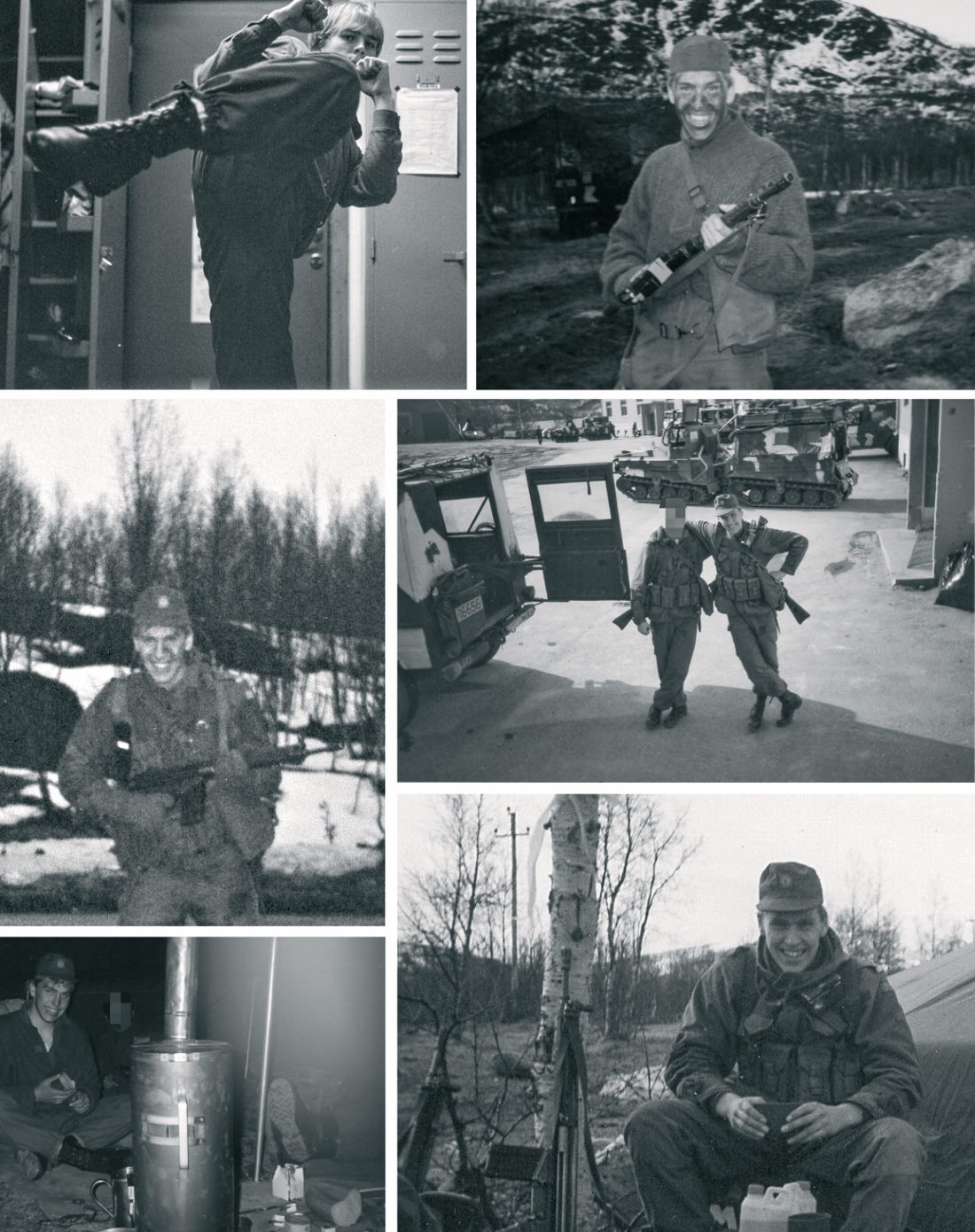
I initially thought I had left cannabis and partying behind when I enlisted, but it didn't take long before I got to know other users in the military. What followed, of course, was the usual — parties, drinking and cannabis. That once again became the ultimate entertainment during our service.
I had begun to feel that I was developing into a man — being held accountable and having to live up to the responsibilities I had been given. Instead, I became a more hardened version of the person I already was before I enlisted.
In my teens before military service, I can't say I thought fighting was particularly cool — it was just something you had to do from time to time. Bjørn was a cannabis user I got to know in the service, and he had trained in Thai boxing. We started training together, and I found it interesting. I had done karate and boxing as a boy, and the technique came naturally. It suited me well. What wasn't so good was that I became drawn to fighting whenever we went out drinking. I had thought I had grown out of it, but fighting on a night out seemed entirely acceptable during military service.
Since it only happened when I was drunk — and always against men from other companies within the same base — running into those same people afterwards was always an awkward and humiliating experience.
Over the twelve months of service — three months in the south and nine in the north — we didn't get much leave. It felt as though I had been away from home for a solid year, and it was very strange to come back. I felt like a new and different person, but back home not much had changed. I hadn't really become a new man, but I had begun to feel like a better version of myself.
It didn't take long before I had slipped back into the same situation as before I left. I returned to my old job as a landscape gardener, and my mother pressed me to find a place of my own. She felt I was now an adult who needed to stand on his own two feet. It felt strange, because I didn't want to leave Tonsenhagen. I wanted to stay close to my friends — they were all I had in life.
I felt lucky when I managed to rent a two-room flat in the Tonsenhagen shopping centre building. It didn't take long before it became one of several gathering points for other cannabis users. I strongly disliked this, because I had a desire to find a more forward-looking path for my life — but I was powerless. I was tied to cannabis and the world I belonged to. I was discharged from service in January 1990, and that same autumn I quit my job as a landscape gardener.
After military service — having lived in my two-room flat for less than a year — I reached the point where I had simply had enough of my job, and I was burnt out from the trade I had been in since starting as an apprentice at sixteen. I was nearly twenty-one and now without work. Without income I couldn't meet my rent, so I lost the flat. My only option was to go back to my mother and ask to move into my old room again — which she reluctantly agreed to.
I have so far taken the reader through parts of my childhood and background, but stay with me as I tell you about something extraordinary that happened next. There is, of course, far more to the story than what I have shared here, but that is not the purpose of this book — to dwell on how wretched and difficult my life has been. The purpose is to tell you how my life was completely transformed in relation to everything that has so far been described as my inheritance and lot in life.
I was now unemployed with little to fill my days — few prospects and about to turn twenty-one. I spent most of my days at home waiting for friends to come back from work so I could spend the evenings with them. In this situation I found myself with a great deal of time to think, and I thought about all kinds of things. I didn't feel depressed, despite the situation I was in.
Around this time, things were happening across the world. Saddam Hussein had recently invaded Kuwait in the autumn of 1990, and the United States had started beating the drum. It looked as though the whole world was heading into a new conflict. The Soviet Union and Yugoslavia were on the verge of collapse. Several states within both were moving toward independence — and this would not happen without war and devastation, as history has shown from the various Soviet satellite states and the wars in the former Yugoslavia, with the genocide and international intervention that followed.
The first international intervention I paid close attention to was the one about to unfold in Kuwait and Iraq. I had myself served in Norway's readiness force — positioned to respond if the Soviet Union launched an attack from the far north. For my part, the Cold War had amounted to nothing more than standby duty, which is how most of us remember that era of East–West tension.
Not a single shot had been fired. But now everything felt different — and what was this feeling? I began to recall something I had heard before, something about a Third World War and how it had been predicted or prophesied. I remembered something about a man called Nostradamus, who was said to have prophesied the Third World War and the end of the world — or something along those lines.
I became deeply preoccupied with existential and philosophical questions. I wanted to be enlightened — to find out whether there was some connection between these old prophecies and all the new events unfolding in the news.
Something was nagging at me, though I couldn't quite put my finger on it. Determined to get to the bottom of it, I went to the library and found a book on Nostradamus. I brought it home and set about studying it — but for someone who had never been particularly fond of reading, Nostradamus did nothing to improve the experience. It was a soup of impenetrable poetic riddles. I came away none the wiser, and set it aside.
But the nagging itch wouldn't go away. The United States was now well underway with Operation Desert Storm, in coalition with the leading NATO nations. Something was happening. George H. W. Bush had also spoken during this Kuwait crisis — not only to the American people, but to the entire world — about a new world order.
"We stand today at a unique and extraordinary moment. The crisis in the Persian Gulf, as grave as it is, also offers a rare opportunity to move toward an historic period of cooperation. Out of these troubled times, our fifth objective — a new world order — can emerge: a new era, freer from the threat of terror, stronger in the pursuit of justice and more secure in the quest for peace. An era in which the nations of the world, east and west, north and south, can prosper and live in harmony…" — George H. W. Bush, September 11, 1990, address to a joint session of Congress.
The words about a new world order meant little more to me — or to most ordinary people — than fine political clichés, quickly forgotten. But those words from George H. W. Bush would take on a literal meaning later. For now, let me tell you what happened next.
Whether you call it memory or something absorbed subliminally, there was something buried deep in my mind about the end of the world — not from Nostradamus, but from somewhere else. Something about the Antichrist, the way you had seen it depicted in The Omen films — and it came from somewhere in the Bible. The Book of Revelation, or something like that, where it speaks of the Antichrist — the very verses and scriptures that The Omen films were drawn from.
Of course I remembered where 666 came from. It had been drilled into me during my heavy metal years — one of Iron Maiden's most famous songs: 'The Number of the Beast.'
I knew that the number of the beast, 666, came from the Book of Revelation in the Bible — but that was the extent of my knowledge.
The thought of possibly finding something about the end of the world in the Bible began to occur to me — but the idea of actually sitting down, opening a Bible and reading from it felt humiliating and shameful. As far as I was concerned, people who read the Bible were nothing more than weak, pathetic Christians who couldn't make anything of themselves in this world. People who were slaves to manipulative individuals and organised sects.
My only previous connection to Christianity had been my confirmation — and I was only confirmed because of the money I would receive. As a confirmand, you were expected to attend classes with the priest for a full year. I showed up two or three times and had no real basis for being confirmed, but the priest confirmed me anyway. But if I were to open a Bible, my intention certainly wouldn't be to become a Christian — so it couldn't go as badly for me as it had for those pitiful believers.
I was home alone, and there was no one to see if I opened a Bible. That restless itch was still there — I just didn't know where it was coming from. Wandering through the living room one afternoon, I went over to my mother's modest little bookshelf. And there it was — my own personal copy of the New Testament, given to me at school, still sitting in our home. Funny, I thought. I hadn't touched it since my days at Tonsenhagen primary school — the school where we recited the Lord's Prayer every single morning. The school had given us each a copy to keep, and I had only ever read it there. I actually found it slightly amusing. I sat down, opened the New Testament, lit a cigarette and started leafing through it.
I had a general idea of what the book contained, but I had never sat down and read from it on my own terms. In my mind it was worth no more than a stack of old newspapers — something worthless you simply throw away. And yet this book had not been thrown away. It had been kept. It was just sitting there quietly on my mother's modest shelf, waiting for me.
My first instinct was to go straight to the passage about the Antichrist and the number of the beast, 666. I knew I could find that in the Book of Revelation — but it wouldn't be quite that simple. The Book of Revelation turned out to be just as impenetrable to me as Nostradamus' prophecies had been.
I read through the Book of Revelation but couldn't find any clear connection between the number and mark of the beast and the figure of the Antichrist as I imagined him — based on what I had seen in The Omen films. I put the book back on the shelf, went out to meet my friends that evening, and was free from any further reflection for the rest of that day.
In the days that followed, a phrase from the Book of Revelation had lodged itself in my mind. I had noticed it when I first read it, then forgotten it, then found it coming back to me. It appeared in several places and I had read it more than once — perhaps that was why it stayed with me. The words were:
'He who has an ear, let him hear what the Spirit says to the churches…'
The words were rather mysterious, I thought. But nothing more than that. I was probably just an armchair philosopher when I was bored. When evening came and I could be with my friends again — and get a hit of cannabis — I was exactly where I wanted to be.
Days came and went — but that restless itch returned from time to time. I felt there was something unfinished with the New Testament. Once again I went to my mother's modest shelf and sat down with it — perhaps for the third time now. Until then I had only read the Book of Revelation, but a different thought suddenly struck me: who was this Jesus, really, and what exactly did this book say about Him?
From something I had valued no more than old newspaper, the rest of the New Testament was starting to look like something worth knowing more about. Perhaps there were other passages about the Antichrist, the mark of the beast and the end times? Well then, I thought to myself — I have nothing else to do, and no one can see me or knows I'm reading this. Let's go.
It took me several days to read through the entire New Testament — and for someone who had barely ever finished a book, this was quite an achievement. But it wasn't beyond me. I had plenty of time, unemployed as I was, with nothing else to do. I was quite proud of having read it all the way through — but what did I actually get out of it? Not much, really. The language was very different from what I was used to. There were many words I had never encountered before, and I probably missed a great deal because of it. The book went back on the shelf, and the world remained exactly as it had always been for me.
Pål had started to have quite a bit of free time during the day, which suited me perfectly since I had plenty of boredom to fill. Pål didn't have a driver's licence, but I did. I didn't have money, but Pål did. He bought a second-hand car, which I got to drive most of the time — doubling as his chauffeur. Pål was running some shady business on the side, though he kept me at a safe distance by not letting me know too much about it. I felt like I was living the dream. I got to drive around all day, didn't have to work, and Pål kept me well supplied with cannabis. Life was smiling on me right then — except for that nagging itch that kept coming back uninvited.
In the days that followed, I felt I simply had to take down the New Testament and read it again. I found myself asking why I hadn't understood what I had read. A strong urge to push myself — to truly understand — took hold of me. I considered myself a simple soul, but no one else had to know about my limitations when it came to personal knowledge. Testing myself couldn't have any negative consequences, could it? I was at a low point in life — things could only go up.
I actually sat down with the New Testament again — and why did I do that? There was something mysterious about it, I felt. Even though I hadn't understood most of what I had read, it was as though I had grown hungry to understand what was written there. Now I wanted to understand, and I told myself: if I focus and concentrate, I will get more out of the reading.
Sitting down to read a book was a rare effort for me. Normally, whatever I read needed tabloid-level appeal before I would get through more than half an hour of it in total — and here I was, pushing myself to read something as dry as the Bible? It was all quite absurd. But the vague, unidentifiable itch I had felt somewhere inside me had started to feel less like an itch and more like hunger. Hunger to know more — but know what? That, I still didn't understand.
As I read more, I began to accept this figure of Jesus. I began to accept that He could actually be the Son of God — but that didn't make me a Christian. No, that was never my intention. I was simply curious, wanting to learn about certain things and do a little investigating on my own terms. And I did — because there was no priest or representative of any religious group sitting beside me telling me what the text meant or how to interpret it.
I felt that this gave me an objective encounter with the Bible — I could form my own understanding, uninfluenced by anyone else's interpretation. Sitting there in complete secrecy, reading the New Testament, my understanding was shaped by nothing but the words themselves. That was how my days looked: I either sat at home reading the New Testament, or drove around with Pål and spent time with my cannabis crowd.
There were days I didn't read at all and simply sat and thought about what I had read. I reflected on everything I had understood — and on much that I hadn't. I remember sitting in the kitchen, letting my thoughts drift over what I had read. Then, all at once, a passage from the Book of Revelation rose up in my mind. It was as though all the words came at once — as if the words came alive and reached into the deepest part of me. They went:
'and the devil who had deceived them was thrown into the lake of fire and sulfur where the beast and the false prophet were, and they will be tormented day and night forever and ever.'
This was no longer just text on a page. These words had something to do with me. They concerned my fate, my outcome, my judgement — whether I would be foolish enough to follow this world to its end, into eternal damnation. The word 'eternity' rang through me as though I heard it in an echo. I felt a terrible anguish deep inside about my own future — not here on earth, but what would happen to me after death. Something dreadful.
I sat there with a deep, deep anguish inside me. I was shaken to my core and could find no words — only feelings. Feelings that formed themselves into words within me: 'What do I do? I don't want to be lost.'
Fortunately for me, there were no audible voices. Had there been, the whole experience would have been far more traumatic. I tried to shake it off. This was certainly not what I had anticipated happening to me — that I would start thinking about eternity and eternal damnation. Everything had turned in a direction I had never considered and could not have foreseen.
I carried on living as I always had. There was no dramatic conversion then and there, but I had been given entirely new things to think about. Much of what occupied my mind was what I had read in the New Testament. Thoughts would come as though someone were reading passages aloud inside me — questions and answers back and forth. Much of what I had previously thought, I was beginning to see differently. And the answers always led back to the same place: there was no other way out than the one Jesus spoke of.
Now that I knew the truth, I had to make a choice. I knew the truth, and I could not turn my back on it. To do so would be to be lost. This had become a recognition — a truth for me. There I sat in my solitude, wanting to take hold of knowledge that would change everything. No one had been present to influence me, to use persuasive words or show me anything at all. No, I sat entirely alone, and there was nowhere in the world I could hide from the truth that had now been revealed to me.
In the days that followed, I walked around with a feeling of loss — as though I had lost the whole world. Everything I held dear felt gone to me. But perhaps only when I was alone, because I did not actually change anything about the way I lived. Everything was exactly as before. I suppose it was because I did not know how, or what, to do. The only place I could find comfort was in the New Testament — for I now knew that the answers to all my questions were there.
The day would come that would change everything. Up until now I had moved from curiosity about whether the end of the world was real, to the Bible and light reflections on its contents, to a recognition of the truth about damnation — and that the solution was to be found somewhere in the person of Jesus. It would not happen in any way I could have thought up or imagined for myself.
'What no eye has seen, nor ear heard, nor the heart of man imagined, what God has prepared for those who love him.'
And it would come to me like this:
As I sat reading, God would reveal Himself and make Himself known in a way I could never have imagined. I was sitting and reading, and in one single moment the words on the page became a direct answer to the questions and thoughts within me. It was as if the words came alive, and my inner being became one with the words I was reading. It was like a voice — and yet not a voice. It was not mediated through physical senses like hearing or any other feeling. It came from within me, and it came with full force. There was no doubt. Right then and there I knew I was having a supernatural experience. I have many times tried to describe or explain what that experience was like — but as I quoted above, it is best described by these words:
'What no eye has seen, nor ear heard, nor the heart of man imagined, what God has prepared for those who love him.'
It happened to me. I could not see it with my own eyes. I could not hear it with my own ears, and I could certainly not have imagined on my own what was about to happen — that God would make Himself known to me.
In that same moment I was filled with a deep and heartfelt joy. Here I sat, having a supernatural encounter with God himself. It felt as though I had won the lottery jackpot. I had truly won the prize.
The words that came alive for me were the precise words I needed to know. They were knowledge and understanding about how to walk in His plan of salvation for me. In the time that followed, these experiences would come from time to time — but not in the way I expected. They would come at exactly the right moment, so that I could clearly see what choices were right and what were not. How to think rightly, speak rightly and act rightly. It all began with me stopping swearing and cursing. Then stopping arguing with my mother and lying to her. Even when she gave me a thorough dressing-down, I would hold my patience and not retaliate. It would have been utterly unthinkable, before this time, for my mother to stand and shout at me without me firing back.
Where God may have had a slight difficulty with me was that I was terribly slow to understand and then to act. The guidance I received from God through his word did not change me overnight. It was not as though I threw everything aside and dressed myself in a white shirt. No, I continued to live essentially as I always had — with the exception of some improvements in my behaviour. But thank God for his patience.
I still had no clear way of describing to myself everything that had happened to me. No one had put a name to it for me, and it had not been compared to anything I was already familiar with. So who could tell me what was right and what was wrong — and how any of this could happen? It was, quite simply, only the word I was reading that I trusted, and that I allowed to lead me.
The words I had read from the New Testament were being proclaimed and explained to me from within, day after day. They were like food to me. They gave me the nourishment I needed.
Then came a day — and that voice which was not a voice, and yet was a voice that spoke with complete clarity. Without any doubt on my part, it spoke to my innermost being, if not in direct quotation, then in content built upon what I had read from the New Testament. Loosely paraphrased, it went:
'Øyvind, will you not confess Me before the people in your life? If you are one who wishes to follow Me, should you not confess yourself as a Christian to others?'
These words — or rather this deep conviction about what I felt and understood — told me it was the right thing to do, but they frightened me considerably. Until now, no one had known what I had been doing with my days.
It was a well-kept secret that I sat at home reading the New Testament. If others were to find out, it would make me feel ashamed, embarrassed and thoroughly un-masculine — I would come across as a complete weakling.
Those were the thoughts I had about telling others I had become a Christian. I had little desire to go through with it — but since that intimate voice within me urged me gently and respectfully, I could not let go of the fact that it was the only right thing to do.
I felt that this would open up more of God's presence to me, and that I would be able to experience more of Him. For that was how it had worked for me: every time I acted in faith on that inner voice — on the right choices and the changes in how I was to think, speak and act — there was always a confirmation within me, a feeling I could not compare to anything else in this world. It was as though my soul, heart, mind and spirit were overwhelmed with bliss, joy, peace and love. It was as though I were a vessel being washed clean on the inside — everything dirty, every fear — gone. It was truly wonderful to be led into the mysteries of God. I wanted more of it. But the next step was to confess myself as a Christian to others.
The first person I would confess my faith to was my best friend. If I was going to treat this as a sacrifice — confessing myself a Christian, giving up all dignity and sinking as low as it was possible to sink — then it had to be to my best friend. And what was rather remarkable, as all this was going on, was that it mattered so deeply to me to make this confession. It would turn out to be a profoundly significant act — one that would change everything in my life from that point on.
Pål and I were out driving, and I sat there quite tense — it felt as though I was about to confess to something terribly wrong. I had to sit and work out how to phrase what I was going to say, and how to summon the courage to say it. But it was on that car journey that I told Pål I had become a Christian. I said it in a single short sentence, and Pål responded immediately with: 'Is that right?' — and somewhere in the air hung a large and very serious question mark.
Pål did not respond by trying to make me look foolish, as I had feared. The car simply fell completely silent. Something broke between us right then and there, and when I tried to explain to Pål how this had happened, he simply would not hear it. He deflected by saying that since I had made such a choice, it would be good for me — but that it was not for him.
It was a relief to confess myself as a Christian. I felt that I was doing everything right, and that God was with me. But there were areas of my life I had no intention of touching. I still liked to party. I had given up neither alcohol, cannabis nor tobacco. That inner voice addressed this from time to time, but my thinking was locked and fixed — partying and drinking were simply not up for discussion.
After some time I had confessed my faith among several of my friends. I would sit at our parties and speak about Jesus, telling them what I had experienced. They didn't scoff at me or dismiss me. I was, after all, sitting there smoking cannabis and drinking with them. I didn't exactly come across as a respectable preacher, and I suspect they didn't give much thought to what I was actually saying. To them I was probably just someone who had lost the plot.
Østreheim Pub was nothing more than a rowdy local bar in Årvoll — the kind of place that sold only beer, cheese sandwiches and frozen pizza. In a reasonably contented mood one evening, I ran into some party girls I knew there. Everyone was there just to drink, and there I sat with these women, talking about my Christianity — or perhaps attempting to preach to them. They were somewhat surprised to find me sitting there drinking while proclaiming salvation and Jesus in the same breath. They disagreed strongly with the idea that a Christian could sit and drink and party at the same time. They had actually visited a church congregation, and there was certainly no one there preaching and drinking alcohol simultaneously.
This was not quite the response I had hoped for, but I didn't know any different. I had never been part of a church congregation. My only contact with other Christians had been the occasional visits to church during primary school, and the two or three times I had attended as a confirmand.
But what those women had said made me think — and deep down I understood that they were right. My focus in what I had shared with my friends had been the supernatural experience I had come to know and wanted to convey. That was also what drove me forward, and what I wanted more of.
From where I had started to where I now stood, I had shed a great deal of my bad and disrespectful behaviour. But what if I actually needed to come across as a credible witness? Of course I wanted that — but who could show me how? Who could guide me in the right direction? These were thoughts I began to reflect on deeply from that point on.
As my faith did not fade but grew stronger day by day, I was about to experience a confrontation on a spiritual level unlike anything I had encountered before in my life. It was clear that someone or something did not like what I was doing — I could feel it in the atmosphere around me. It was something I could not identify. I had read in the New Testament that those who chose to believe in Jesus would face persecution. I had not exactly experienced any persecution, because the people around me accepted me, and I them. But this was about to change dramatically.
I remember one evening in particular when we were at Trond-Inge's place, smoking cannabis and drinking beer. That evening his flat was raided. Lene rang the bell and came in — she was there to buy some cannabis. She mentioned she had seen some suspicious-looking people outside who she thought might be plain-clothes police. We all took that on board and smoked up whatever cannabis we had left. Lene left, and Trond-Inge peered out through the door to check. It was indeed the case — and rather than waiting for the police to kick the door down, Trond-Inge simply opened it himself. The officers came in and put us in handcuffs while they searched the flat, but we knew there was nothing to find, and they didn't find what they were looking for.
The police broke up our gathering and we had to find somewhere else to be. I offered to take everyone back to my mother's place — that was where I was living at the time, and I knew she wasn't home. Steinar had taken the raid very badly. When Steinar mixed cannabis and alcohol, he became a highly volatile and unpredictable person. He had convinced himself that we had been tipped off to the police by a girl named Anne, who lived in the neighbouring stairwell.
After our gathering at Trond-Inge's was broken up, Steinar did not come back to my place with the rest of us. He disappeared on his own, saying he had some unfinished business. His drunken, cannabis-fuelled rage was about to bring out the worst in him — not just in irrational talk, but in action — because he could not shake the idea that Anne had informed on him and the rest of us.
Later that same evening, several of us had been at my place for a while. I stepped out onto the first-floor balcony for some air, and there I saw Steinar approaching alone. Even though it was fairly dark outside, I could clearly make out that he was carrying a shotgun. What on earth is he doing? I thought. I ran out to meet him — I had no intention of letting him inside with a shotgun.
When I reached him, I asked what was going on, and he blurted out that he had fired into Anne's door. I had to think fast. What I did next was pure stupidity and gang loyalty — I took charge of the shotgun. I disassembled it, put the pieces in a black bin bag, ran up toward the edge of the woods to a quarry and hid it among the rocks.
When I got back to my place, Steinar was sitting at the centre of discussion and conversation. I could see he was seething. He explained that he had gone to fetch his shotgun to confront Anne about whether she had informed on us. He repeated over and over that Anne was jealous of him, and that this was why she had tipped off the police — leading to the raid at Trond-Inge's.
Steinar went on to say that some neighbours had seen him with the shotgun in the stairwell next to Anne's building. He had then walked over to Anne's stairwell, gone up the stairs, stood outside her door and shouted at her to open it. After a while, Steinar had pointed the shotgun at the door and fired through it. The blast had gone straight through the door and out through the window on the other side of the flat. Thank God, Anne had not been home.
As Steinar told all of this, he fixed his gaze on me. I could see that despite being full of alcohol and cannabis, he was equally full of adrenaline and intensity. He was busy constructing his alibi and began talking about what he had 'not' been involved in. It was as though I was being drawn into his stare, and it suddenly felt deeply uncomfortable. He said: 'Now you can forget all that f***ing Christianity of yours. You're going to be my alibi — I've been here with you all evening.'
When he said this, it was as though I found myself somewhere else entirely, in another time. Earlier I described that wonderful supernatural experience of God's word coming alive for me. Now I was experiencing something else supernatural — but it was not from God. Rather than Steinar's voice and figure sitting before me, I experienced being spoken to by evil itself on a spiritual level that is difficult to describe.
It felt as though I was being accused by the devil himself — but don't misunderstand me. I certainly did not believe that Steinar was possessed by the devil and speaking through him. No — I felt an awareness of the evil spiritual sphere around me, within me and all about me, if it can be explained that way. The experience was something entirely new, something completely unknown that was happening right then and there. A discomfort I had never felt before.
The accusation would play out in the following way, and I could see it all clearly at once as I sat facing Steinar. Steinar wanted me to give false testimony on his behalf — to say that he had been at my place all evening — despite the fact that there were witnesses nearby who had seen him with the shotgun. None of that mattered, as long as I gave false testimony that he had been with me.
That was one dilemma — I could see myself standing before a judge and committing perjury, something I would never dare to do before God. The other option was equally unthinkable: telling the truth, which amounted to the same as snitching — and everything about the way I had been raised as a young man told me that snitching was the greatest sin. By the code we lived by, you simply did not do it.
I asked myself: how on earth did I end up in this bind? How could this incident put me and my faith to such a test? How could I suddenly be confronted in this way — with a direct challenge to everything I believed?
In the days that followed, I thought a great deal about how I had ended up in that situation. That same night, Steinar had received a visit from fully armed police. He had been woken in his own bed to find himself staring directly into the officers' weapons. Steinar was also preoccupied with his defence and how he would handle the upcoming trial. He had obtained a lawyer and had named me as a witness.
My conclusion about what to do gradually became clear, and I would find my way through it as follows: I would not inform before a judge, and I would not commit perjury before a human judge — or before God. The only option was to remain silent. I told Steinar this, and he warned me that the judge could hold me in contempt if I refused to testify. I told him I was fine with that. If I am held in contempt for not testifying, then so be it. Steinar thought this was hopeless, but he accepted that I would not be his witness. In the end, I was never summoned to testify.
The whole situation had shaken me — but more so the spiritual and supernatural confrontation I had experienced facing Steinar than the difficult dilemma of avoiding both informing and perjury. It led me to start thinking seriously about whether my new Christian outlook on life could be combined with my worldly excesses.
Despite all of this, I would continue to experience God's guidance in my life — but not always in the words I expected, or hoped would fill me with joy. There were also words that filled me with fear. Once again I experienced living words from the New Testament — as I have described before, as though the words came out of the text and were spoken within me. These words were from Jesus, from the Parable of the Wedding Banquet in Matthew chapter 22:1–14:
'But when the king came in to look at the guests, he saw there a man who had no wedding garment. And he said to him, Friend, how did you get in here without a wedding garment? And he was speechless. Then the king said to the attendants, Bind him hand and foot and cast him into the outer darkness. In that place there will be weeping and gnashing of teeth. For many are called, but few are chosen.'
What I experienced with those words was like being unable to escape a truth about myself. A recognition of truth within me — a conviction of judgement and the need for repentance. This was about me. I had tasted God's goodness and been granted a share in His glorious company — yet something was missing. It was this sense that I needed to do what God wanted me to do — to set myself apart from this world. I came to the recognition that I could not continue drinking alcohol, smoking cannabis and tobacco. I saw myself clearly and unmistakably in Jesus' parable — that man without a wedding garment. I felt unclean, and a burden of sin came over me again. This salvation would not come to me on my own terms — but on the terms of my God.
As the reader will have gathered by now, I had not visited any church or congregation, nor had I shared any experiences with other Christians. I did not really know how to live my Christian life. But thank God for the guidance I received from Him, and for the part I was given in those supernatural experiences. I could see all along that God wanted something for my life. There was a red thread running through it all that I could follow. For every question that arose in my thoughts, answers and solutions would come in the same way — through God's Word as written in the New Testament.
But where and with whom could I share my experiences, and who could I talk to about my newly found faith? Perhaps someone could tell me how to live — how to live rightly before God. What would be the right faith community, one that matched the faith I had arrived at through my own study of the New Testament?
I now began to long to meet some genuine, true Christians — but they would have to be Christians in the same way I was. People who would believe in the kind of Christianity by which I myself had become a Christian.
I began thinking about the priest at Tonsen Church, where I had been confirmed. It felt completely wrong, and from what I could remember, there had not been much spirituality or genuine Christianity in that church — not as I had experienced it during my confirmation. No, it would have to be someone capable of stretching their faith higher than a priest in the state church could manage. That was at least the conclusion I reached. Going to the state church simply did not feel like the right thing to do. The priest would probably think I had lost my mind. No, that was not the solution.
One day when I was home during the day (as usual), there was a knock at the door. Outside stood a couple of men I recognised as Jehovah's Witnesses. As I recalled from over the years, when Jehovah's Witnesses came to your door to save you, the thing to do was close the door as quickly as possible. But I did not do that now, because it was rather striking that these men should turn up at my door at exactly this moment.
Until now I had not shared my newly found faith with anyone who called themselves a Christian. I had been raised to know that Jehovah's Witnesses were a closed cult, and that one should be careful about listening to them.
I was simply curious about what they had to say. When I told them I was a newly converted Christian, they became very eager. By that point I had begun to know the Scriptures of the New Testament reasonably well, and I told them I had great regard for the Book of Revelation and that I saw in it a prophecy about the end times. When I said this, it was like adding fuel to the fire. They became even more eager to convince me that their church and faith community was the only right one.
I remember starting that conversation with those men feeling very confident — I had plenty to draw on from God's Word. But then, out of nowhere, a restlessness came over me. We were exchanging Scripture back and forth, when I suddenly felt confronted by a big and important question I had been wrestling with for some time. The timing was striking, and I experienced it as a spiritual confrontation much like the one I had had with Steinar in my own home — though not quite the same. Two seemingly respectful men were standing in front of me, and they carried themselves accordingly. But in this confrontation I was challenged on whether I had made the right choices in my life, and whether those choices mattered for how I would build on my salvation in Jesus Christ. I hit a wall. I couldn't understand how these men were able to confront me with questions and thoughts buried deep within me. I couldn't answer back — and I couldn't understand why. Could these men and their faith be what I was looking for?
When they had finally managed to get me quiet and listening, they gave me a book. It was about the Jehovah's Witnesses' understanding of the Book of Revelation and the end times. It was packed with illustrations of the visions John received about the end times. I found it genuinely interesting and thanked them for the book.
We wrapped up the conversation, and I went inside and started reading. There were vivid illustrations throughout, and a lot of text mixed with quotes from the Book of Revelation. The book made a strong impression, and I actually began to wonder whether the Jehovah's Witnesses might be the right church for me.
These were thoughts I kept turning over in the days that followed. Were the Jehovah's Witnesses the right church, or was it completely wrong? How could they manage to bring answers to my questions in a way that almost felt like God's endorsement? In what was close to a supernatural way, I had experienced something on a spiritual level — an answer to the questions I'd been wrestling with about God and His Word. And yet it wasn't quite as powerful. Similar, but not the same.
My questions were to be answered by God, and it didn't take long after that for it to happen. This is how it went: one day I was sitting with Pål at some of his friends' place. I didn't know them well, so I sat by myself and thought through the whole experience with the Jehovah's Witnesses and what I had read in their book. One of the illustrations showed the Father as He is described sitting on His throne. In some strange way I just sat there staring at that image in my mind — when suddenly, like lightning shooting through me, I saw the figure in that illustration as the devil himself. It was as if a curtain had been pulled aside, and I could see clearly who was depicted there. At the same time fear surged through me, and great unrest rose up inside. In my mind I cried out in desperation: 'God, fill me!'
Maybe in sheer panic I had nothing else to cry — I just couldn't think of anything else. The moment I did, I could feel something powerful happening. A response came from God, and the only way I can describe it is this: I had cried out for God to fill me, when what I really meant was for Him to save me. Perhaps it was both — because it felt as though I were a vessel being filled from the top down.
I felt filled inside with something that simply swept away the fear, the anxiety and the unrest that had come over me when I saw the devil sitting on his throne. In the next moment, a passage from the New Testament rose up in my spirit. These were words I had read before, but I experienced them now as though they came directly from God. It was an explanation of what I had seen inside me — and an answer to all my questions about the Jehovah's Witnesses and whether they were the right church for me. The words were from 2 Cor. 11:14:
'And no wonder, for even Satan disguises himself as an angel of light.'
Those words set me free on many levels. Right then and there I knew I was done with the Jehovah's Witnesses. When I got home I was naturally curious to find exactly where in the New Testament those words came from. What convinced me all over again was reading the verse before and after what had been given to me. It reads as follows, 2 Cor. 11:13–15:
'For such men are false apostles, deceitful workmen, disguising themselves as apostles of Christ. And no wonder, for even Satan disguises himself as an angel of light. So it is no surprise if his servants, also, disguise themselves as servants of righteousness. Their end will correspond to their deeds.'
In the days that followed, I thought a great deal about how I was to live rightly before God. I had now stopped drinking, and I had given up cannabis and tobacco. I understood that these were not things a person who called themselves a Christian should be giving themselves over to. I wanted to lay aside everything that might stand between me and hearing from God. Everything I let go of from my old, sinful self had been made known to me by God through the Holy Spirit. And what is the Holy Spirit, you ask?
I have described how I received words from God that were — and remained for me — supernatural in character. Early in my reading of the Bible I had come across the passage that speaks of God sending a Helper. John 14:15–17:
'If you love me, you will keep my commandments. And I will ask the Father, and he will give you another Helper, to be with you forever, even the Spirit of truth, whom the world cannot receive, because it neither sees him nor knows him. You know him, for he dwells with you and will be in you.'
Very well, I thought. This Helper — I very much wanted to meet him. And I read on, in John 14:26:
'But the Helper, the Holy Spirit, whom the Father will send in my name, he will teach you all things and bring to your remembrance all that I have said to you.'
It was no difficulty for me to believe and accept what was written in the New Testament. I simply took Jesus' promise at face value — that I would meet this Helper. I could not imagine or work out what that encounter would look like, but when it came, it was nothing like I had expected.
The Holy Spirit had already come to me — he was with me and had already spoken to me. The God I heard and encountered, the word of God that came to me and came alive within me, this was the Holy Spirit speaking to me, teaching me how to think, speak, and act — the Holy Spirit who showed me and reminded me of everything I had read in the New Testament, who brought back to mind all that Jesus had taught, and who led me to salvation.
This was the Helper who had been sent to me, and the Holy Spirit could make himself known to me from time to time — not as I might have wished, but very likely at exactly the right moment.
There was not much I got up to in those days, but I was fully occupied with removing thoughts, habits, and the things I was being led to change. As I sat thinking about this, my eyes were drawn to the corner of the living room. There stood my vinyl record collection. There was not much I owned in this life that had any real value, but if there was anything, it was my vinyl records. I had spent many years building that collection — mostly special imports and limited-edition pressings that many considered to have genuine collector's value. There was a real pang at the thought of getting rid of them — but at the same time I thought: I was a Christian now, and it was wholly inappropriate to hold on to music that was devil-inspired. It was, quite literally, music that glorified Satan.
When, not long after, I was told by the Holy Spirit that I had no use for such idol-worshipping music, it did not take long before I threw out my entire vinyl collection. I looked out the window, and as it happened, a skip had been placed right outside my building. It was positioned almost close enough for me to drop the records straight down into it from the window — but that didn't quite work out.
I had to make sure no one could get their hands on this repulsive music. I went outside and stood up in the skip and snapped every single record in two. A few younger teenagers came by and saw what I was doing. Almost in tears, they begged me to stop and hand the records over to them instead — which I of course refused, something they found utterly incomprehensible. They probably thought I had completely lost my mind.
Many would no doubt regard this as a sign that I was suffering from some form of mental illness. But what many people do not know — those who have no real familiarity with mental illness — is that mental illness, in every documented case, has a negative effect on the person affected. There was no such negative effect on me; quite the opposite. I went from being a tobacco smoker, a cannabis addict, and a weekend drinker to choosing a far healthier outlook on life. For in keeping with the Bible's promise of being born again through the Holy Spirit, I literally felt as though I had been born again. I was filled with joy and peace, and I felt a love for all my fellow human beings.
With all that said, I will now finally come to how I experienced my third spiritual confrontation. It actually began with a dream I had one night — and it was a very particular dream. So particular, in fact, that to this day I can recall it as clearly as if I had dreamed it the night before.
It began with me dreaming that I woke up in my old boyhood room in the middle of the night. I get up and make my way over to the window, which is covered by curtains. I move carefully, creeping towards it. I understand that I must not give myself away to anyone outside — yet I need to look out.
I move to the very edge of the window and take hold of the curtain carefully, so that whoever might be outside won't notice me looking. It is still night, dark outside and dark in my room. I ease the curtain aside and look down and across, under some large, dark spruce trees.
There I see three or four figures. I stand very still and keep watching them. The figures begin to take shape. They look like trolls, and instead of remaining behind the curtain, I am suddenly transported out of the room and down to where these creatures are.
What I now see is the most hideous and evil thing I have ever seen. These trolls have faces so wicked and corrupted they defy description. Before I was saved I had watched most horror films and seen a great deal of evil on screen, but nothing compares to what I saw and experienced in this dream.
As much as I could see of the evil eyes and sneering expressions these figures wore, there was simultaneously this feeling — this presence — of absolute evil.
They look at me while sneering mockingly, but instead of speaking to me, it is as though they are speaking directly into my inner being. And what they convey is that they know who I am and that they can see me. They can see me even when I am still hidden behind the curtain — at a moment when not a single person in the world would be able to see or know I was standing there.
As the reader will no doubt understand, it was natural that I kept thinking about this dream in the days that followed. And I did. The question is whether the dream was as self-explanatory for you reading it now as it was for me. What did it actually mean — if it meant anything at all? I chose to try to make sense of it, given how intense it had been, but the interpretation would not come straight away.
Now that I had chosen to leave my old life behind, I no longer joined my friends in their escapades. Instead, I began to evangelise to them. I spent my days going round trying to find friends I could talk to about Jesus. Some were willing to listen, some were not. There were moments when it felt as though I was about to get a punch in the face — but no, it was as though I could pass right through their midst. They simply didn't dare touch me, but they began to grow more hostile towards me.
I understood now that my convictions and outlook on life — which I had changed so abruptly, in full view of my friends — could not be combined with belonging to the crowd at Tonsenhagen. A natural divide formed between us. It was as if I had become a stranger, or someone they no longer accepted.
This is where I understood the meaning of my dream. I had been a person who was part of this world as we know it. I had begun pulling towards the opposite of what this world was — the kingdom of God. The devil does not let such things pass unnoticed. It dawned on me that I had surrendered my citizenship in this world. That meant losing all the status and standing a person feels they possess here.
But it was lost in exchange for something far better, and so I could see this as a warning from God himself about what was about to happen — that this was the very experience of persecution. And God had spoken to me about it beforehand in his Word, 2 Tim. 3:12:
'Indeed, all who desire to live a godly life in Christ Jesus will be persecuted.'
When all of this happened to me, I did not become depressed. Anyone in the world could have seen cause and effect there — but not this guy. I rejoiced in the fact that God's Word was being continually confirmed as true. Those who desire to live a godly life in Christ Jesus will be persecuted.
But isn't that depressing, you might say? Well, cause and effect would normally produce depression — but I wasn't depressed. I was strengthened instead. Some readers might quote the philosopher Friedrich Nietzsche: "What doesn't kill you makes you stronger." Hmm, perhaps he had a point — but that was absolutely not what I saw as cause and effect in my case. The joy came from God himself, and it was written in his Word, Matt. 5:10–11, Acts 5:41:
'Blessed are those who are persecuted for righteousness' sake, for theirs is the kingdom of heaven. Blessed are you when others revile you and persecute you and utter all kinds of evil against you falsely on my account.'
'..., rejoicing that they were counted worthy to suffer dishonor for the name.'
I have considered it very important to explain how I became a Christian — and it was not through the work of other people. No one else influenced me, and no one had persuaded me or brainwashed me. I testify that it was God the Father, through Jesus Christ and the Holy Spirit alone, who convinced me and led me to salvation — and who further taught me and showed me the way to repentance.
I have great respect for you, the reader who has followed me this far in the book. It is not my intention to beat you over the head with Bible verses — but please bear with me. I want to show you how what happened to me is rooted in God's Word from the New Testament. Take the chance and read the verses quoted here. My intention is not to overwhelm you with Scripture throughout the entire book — but this part will be worth it.
I mentioned above how I was led directly by God and not by other people. Read here what Jesus says in the Gospel of John, chapter 6, verse 45:
'It is written in the Prophets, "And they will all be taught by God." Everyone who has heard and learned from the Father comes to me.'
Here Jesus is quoting from the prophet Isaiah in the Old Testament, chapter 54, verse 13:
'All your children shall be taught by the Lord, and great shall be the peace of your children.'
And John tells us more about being taught directly by God in 1 John, chapter 2, verse 27:
'But the anointing that you received from him abides in you, and you have no need that anyone should teach you. But as his anointing teaches you about everything, and is true, and is no lie — just as it has taught you, abide in him.'
And from the prophet Jeremiah in the Old Testament, chapter 31, verses 33–34:
'But this is the covenant that I will make with the house of Israel after those days, declares the Lord: I will put my law within them, and I will write it on their hearts. And I will be their God, and they shall be my people. And no longer shall each one teach his neighbor and each his brother, saying, 'Know the Lord,' for they shall all know me, from the least of them to the greatest, declares the Lord. For I will forgive their iniquity, and I will remember their sin no more.'
Either one will come to know God through Him making Himself known — or one will not. Every individual will bear their own witness to whether God has made Himself known to them. You will simply feel it. All doubt will be swept aside, because there will be no doubt remaining. I testify to you that God's promise is real, as Jesus says here in the Gospel of Matthew, chapter 11, verse 27:
'All things have been handed over to me by my Father, and no one knows the Son except the Father, and no one knows the Father except the Son and anyone to whom the Son chooses to reveal him.'
Unfortunately, it is not possible to test God to see or verify whether what I am saying is true. There is a condition for anyone who wishes to experience what I have experienced, and it cannot be stated more concisely than Paul's letter to the Romans, chapter 10, verses 9–10:
'because, if you confess with your mouth that Jesus is Lord and believe in your heart that God raised him from the dead, you will be saved. For with the heart one believes and is justified, and with the mouth one confesses and is saved.'
This is tied to the fact that one must actually believe — believe that Jesus is who He is. But how does faith come? The answer follows in the New Testament, in the same chapter, verse 17:
'So faith comes from hearing, and hearing through the word of Christ.'
Does that mean everyone who wants to come to faith in Jesus must go to a church or congregation to hear sermons? That may be a good path for many. My own experience was different. I would therefore encourage you to go straight to the source: the New Testament. There you can read God's Word for yourself, and if you believe with your whole heart, we have a promise from Jesus of salvation. John 6:47:
'Truly, truly, I say to you, whoever believes has eternal life.'
If you, the reader, have perhaps tried this before and found that it did not work as you hoped, there may be various reasons for that. Perhaps you tried to test God and experienced no confirmation. Or perhaps you believed, but chose to go a different way. You may have been in a church or congregation and felt convinced in the moment, only to find that the feeling faded afterwards. That can happen when faith becomes more tied to atmosphere or people than to what one reads and understands for oneself. Let me quote from the Gospel of Luke, chapter 8, verses 5–8:
'A sower went out to sow his seed. And as he sowed, some fell along the path and was trampled underfoot, and the birds of the air devoured it. And some fell on the rock, and as it grew up, it withered away, because it had no moisture. And some fell among thorns, and the thorns grew up with it and choked it. And some fell into good soil and grew and yielded a hundredfold.' As he said these things, he called out, 'He who has ears to hear, let him hear.'
Here Jesus tells a parable and ends with the words: "He who has ears to hear, let him hear!" I myself found this quite mysterious — and I touched on it earlier in this chapter. Further on in the same chapter, verse 10:
'He said, "To you it has been given to know the secrets of the kingdom of God, but for others they are in parables, so that seeing they may not see, and hearing they may not understand."'
I made up my mind — I can remember this clearly — that I would not be among those who could not see, could not hear, and could not understand. I wanted to be among those given to know the secrets of the kingdom of God. Jesus explains the parable in verses 11–15:
'Now the parable is this: The seed is the word of God. The ones along the path are those who have heard; then the devil comes and takes away the word from their hearts, so that they may not believe and be saved. And the ones on the rock are those who, when they hear the word, receive it with joy. But these have no root; they believe for a while, and in time of testing fall away. And as for what fell among the thorns, they are those who hear, but as they go on their way they are choked by the cares and riches and pleasures of life, and their fruit does not mature. As for that in the good soil, they are those who, hearing the word, hold it fast in an honest and good heart, and bear fruit with patience.'
You, dear reader, are someone who today has heard the Word of God. And what kind of soil are you, in the light of the parable above? Is it no soil at all — only rock? Is it soil where only weeds, thorns, and thistles take hold — or is it good soil that will let the seed grow? It is every person's choice, and in time the truth will become clear as to which side one stands on.
A person's salvation is not contingent on having to go to a church or congregation to be saved. It is only ignorance that limits it to that. Going to a church to hear God's Word, then coming forward in front of everyone at an invitation and there confessing one's faith — that is a fulfilment of the conditions, but it is not absolute, and it is not the only condition for coming to faith and being saved. We read above in Rom. 10:9:
'because, if you confess with your mouth that Jesus is Lord and believe in your heart that God raised him from the dead, you will be saved.'
My testimony shows that this condition was fulfilled, because the heart of fulfilling the conditions is that you genuinely believe in Jesus Christ in your heart — that you believe He is who He is. Then comes the condition of confessing yourself a Christian. And what did I do? I told my friends and family: "Hey, everyone — I have now become a Christian!"
There is a great difference between standing before strangers in a church or congregation and confessing yourself a Christian, and confessing yourself a Christian to your own family and friends — and to the rest of the world if possible. Jesus speaks very clearly about this in the Gospel of Luke, 12:8:
'And I tell you, everyone who acknowledges me before men, the Son of Man also will acknowledge before the angels of God.'
If you place your trust in God's Word alone and in the testimony about Jesus Christ from those witnesses He sent — the ones who gave us the New Testament — then you have everything you need. I testify here, in my own testimony, that it is possible.
The path by which I came to faith in Jesus and became a Christian is not one I am aware of having been practised in the various churches, congregations, or communities I have encountered. Some Christians have found it hard to accept when I describe the way I was saved in my younger years. If I knew that others had influenced me or guided me, I would have said so in this book. I cannot of course know whether anyone was praying for me — but no one has since come to me to testify that they were holding me in their prayers while I was living a worldly life, or that my salvation was the result of their efforts.
Scripture quotations in this book are taken from the English Standard Version® (ESV®) and the New King James Version® (NKJV®). ESV® Copyright © 2001 by Crossway, a publishing ministry of Good News Publishers. NKJV® Copyright © 1982 by Thomas Nelson. Used by permission. All rights reserved.